Digital Business Strategy: Driving Growth in Regional Australia
- Eddie The Chef
- 1 day ago
- 7 min read

Standing still risks losing ground as Gippsland’s retail and hospitality scene grows more competitive every year. Adopting a digital business strategy is now a necessity for small and medium enterprises wanting to adapt quickly and win the loyalty of today’s demanding customers. This guide brings practical insights on building digital resilience, from choosing the right technology to developing the skills your team needs, offering Gippsland businesses a pathway to stay relevant and thrive.
Table of Contents
Key Takeaways
Point | Details |
Digital Business Strategy Importance | A comprehensive digital strategy integrates technology across all operations, crucial for regional Australian SMEs to enhance competitiveness. |
Models for Transformation | Businesses should consider various models like Organisational Redesign and Business Model Reinvention to tailor strategies to their specific needs. |
Core Elements for Success | Integration of technology, skilled personnel, and streamlined processes is essential for achieving digital transformation goals. |
Risk Management Necessity | SMEs must proactively manage technological risks and compliance challenges to ensure successful implementation of their digital strategies. |
Defining digital business strategy for SMEs
A digital business strategy transforms how regional Australian small and medium enterprises (SMEs) approach technology, market competition, and customer engagement. Unlike traditional business planning, this approach integrates digital technologies systematically across all business operations. Digital transformation strategies for Australian SMEs emphasise developing comprehensive technological roadmaps tailored to specific business needs.
For regional Australian SMEs, digital business strategy involves more than simply adopting new technologies. It requires a holistic approach that considers operational improvements, talent development, and customer experience. The strategy encompasses identifying digital tools that can streamline processes, enhance productivity, and create new value propositions. Key focus areas include leveraging cloud computing, implementing data analytics, developing digital marketing capabilities, and creating robust online customer interaction platforms.
Successful digital strategies for SMEs typically involve several critical components. These include:
Assessing current technological capabilities
Identifying digital skill gaps within the organisation
Developing a structured technology adoption plan
Creating mechanisms for continuous learning and adaptation
Establishing clear metrics for measuring digital performance
Regional businesses must recognise that digital strategy is not a one-time project but an ongoing journey of technological integration and organisational transformation. The goal is to build digital resilience that allows businesses to quickly adapt to changing market conditions and technological advancements.
Pro tip: Start your digital strategy by conducting a comprehensive digital maturity assessment to understand your current technological landscape and identify immediate improvement opportunities.
Key types and models in Australian markets
Digital business models in Australian markets represent a diverse ecosystem of strategic approaches tailored to regional and national economic contexts. Digital business strategy models demonstrate significant variations across different industry sectors, reflecting the unique challenges and opportunities of the Australian business landscape.
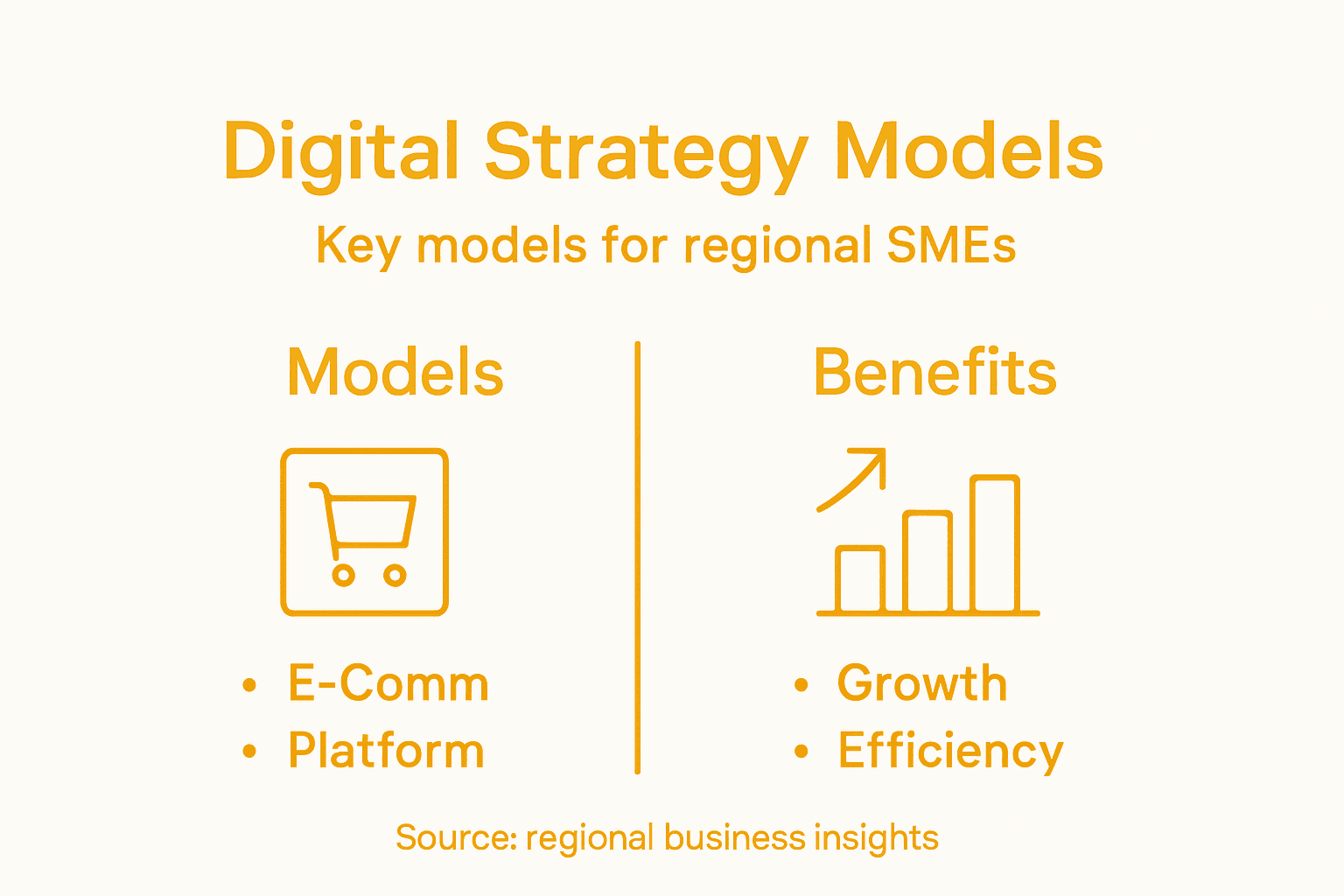
Three primary digital business strategy models emerge as particularly relevant for regional SMEs. The first is Organizational ReDesign, which focuses on internal transformation through digital technologies. This model involves restructuring workflows, implementing digital collaboration tools, and creating more agile organisational structures. The second model is Ecosystem ReConfiguration, where businesses strategically position themselves within broader digital networks, developing partnerships and exploring new collaborative opportunities that extend beyond traditional business boundaries.
The third and most sophisticated model is Business Model ReInvention. This approach goes beyond incremental changes, fundamentally reimagining how value is created and delivered. Key characteristics include:
Developing data-driven value propositions
Creating platform-based business architectures
Implementing adaptive and scalable technological infrastructure
Exploring new revenue streams through digital innovation
Continuously monitoring and responding to market dynamics
Regional Australian businesses must recognise that these models are not mutually exclusive. Successful digital strategies often involve elements from multiple approaches, carefully tailored to specific industry contexts and organisational capabilities.
Here’s a comparison of the three main digital business strategy models for regional Australian SMEs:
Model | Main Focus | Typical Outcomes |
Organisational Redesign | Internal workflows and structure | Increased efficiency |
Ecosystem Reconfiguration | Strategic partnerships and networks | Expanded business opportunities |
Business Model Reinvention | New value creation and platforms | Long-term competitive edge |
Pro tip: Conduct a comprehensive digital maturity assessment to determine which strategic model best aligns with your current organisational capabilities and market positioning.
Core elements: technology, people and process
A comprehensive digital business strategy for regional Australian SMEs requires careful integration of three core elements: technology, people, and processes. Digital business strategy framework emphasises the critical interdependence of these components in driving organisational transformation and competitive advantage.

The technology dimension involves selecting and implementing digital tools that align with business objectives. This includes cloud computing platforms, customer relationship management (CRM) systems, data analytics tools, and collaborative software. For regional businesses, technology selection must balance sophistication with practicality, ensuring solutions are both powerful and manageable within limited resource constraints. The goal is to choose technologies that enhance efficiency, provide actionable insights, and create opportunities for innovation.
The people element focuses on developing digital capabilities within the organisation. This involves:
Upskilling existing staff in digital technologies
Recruiting talent with digital expertise
Creating a culture of continuous learning
Establishing digital literacy programs
Encouraging innovation and adaptive thinking
The process component represents how technology and people work together to create value. This involves redesigning workflows, establishing digital governance frameworks, and developing agile methodologies that enable rapid adaptation to changing market conditions. Successful process integration means moving beyond traditional linear approaches and creating flexible, data-driven operational models that can quickly respond to emerging opportunities and challenges.
Pro tip: Conduct a comprehensive digital skills audit to identify capability gaps and develop a targeted training roadmap that bridges technology, people, and process improvements.
Implementing strategy: steps for local success
Successful digital business strategy implementation for regional Australian SMEs requires a structured and systematic approach. Step-by-step digital strategy development provides a critical framework for businesses seeking to navigate digital transformation effectively.
The first crucial step involves conducting a comprehensive digital readiness assessment. This diagnostic process examines current technological capabilities, identifies skill gaps, and evaluates existing digital infrastructure. Regional businesses must honestly evaluate their starting point, understanding both strengths and limitations. This assessment helps create a tailored roadmap that aligns digital initiatives with specific business goals, ensuring realistic and achievable transformation objectives.
Implementation typically involves several strategic phases:
Baseline current digital capabilities
Define clear digital transformation objectives
Select appropriate digital technologies and tools
Develop a talent and skills development plan
Create measurable performance metrics
Establish governance and change management protocols
Build ongoing learning and adaptation mechanisms
Successful digital strategy implementation demands continuous monitoring and adaptive thinking. Regional Australian businesses must remain flexible, recognising that digital transformation is an iterative journey rather than a one-time project. This approach requires commitment from leadership, investment in skills development, and a willingness to experiment and learn from both successes and challenges.
Pro tip: Create a cross-functional digital transformation team that includes representatives from different departments to ensure comprehensive strategy development and organisation-wide engagement.
Risks, compliance and common mistakes to avoid
Digital business strategy implementation involves navigating complex regulatory and operational challenges specific to regional Australian markets. Digital transformation risk management requires a proactive and comprehensive approach to identifying and mitigating potential obstacles.
Key risks for regional SMEs include technological obsolescence, cybersecurity vulnerabilities, and regulatory non-compliance. Technological risks emerge when businesses invest in digital solutions that quickly become outdated or incompatible with emerging systems. This challenge is particularly acute for smaller organisations with limited technology budgets. Cybersecurity presents another critical concern, with regional businesses often lacking sophisticated protection mechanisms against increasingly complex digital threats.
Common mistakes that regional businesses must carefully avoid include:
Implementing digital strategies without clear objectives
Underestimating required staff training and change management
Failing to conduct thorough cybersecurity risk assessments
Neglecting ongoing technology and skills updates
Overlooking data privacy and protection regulations
Working in technological and departmental silos
Attempting digital transformation without executive leadership support
Compliance represents a multifaceted challenge requiring continuous attention. Regional businesses must stay informed about evolving regulatory requirements, particularly in areas like data protection, artificial intelligence ethics, and digital platform governance. This demands a commitment to ongoing education, regular compliance audits, and a flexible approach to technological adoption that prioritises both innovation and responsible business practices.
The following table highlights the major risks and compliance challenges when implementing digital strategies:
Risk Area | Example Challenge | Mitigation Approach |
Technological | Obsolete systems | Regular tech reviews |
Cybersecurity | Data breaches and attacks | Robust security protocols |
Regulatory | Changing data regulations | Ongoing legal compliance audits |
Pro tip: Establish a dedicated digital compliance and risk management team that meets quarterly to review technological investments, assess emerging risks, and update organisational digital strategy accordingly.
Empower Your Regional Australian Business with a Winning Digital Strategy
Struggling to translate your digital business strategy into real growth? This article pinpoints critical challenges such as navigating technological adoption, building digital skills, and continuously adapting processes to remain competitive. At Marketing Recipes Australia, we understand that regional small and medium enterprises need tailored, practical solutions to bridge these gaps and stay resilient in evolving markets.
We specialise in delivering a comprehensive ‘menu’ of digital marketing services designed just for businesses like yours. From creative content including doodle and showcase videos to expert web design and strategic social media campaigns, our holistic approach combines traditional media with cutting-edge digital tools. Our 30+ years of experience means we know how to help you enhance customer engagement and build genuine connections through targeted strategies that reflect your unique business context.

Take the next step towards transforming your digital business strategy into measurable success. Visit Marketing Recipes Australia to explore how our expert team can collaborate with you. Learn more about our digital marketing solutions and the ways we support regional businesses to grow confidently. Don’t wait to turn digital opportunity into lasting growth – contact us today to start your personalised marketing journey.
Frequently Asked Questions
What is a digital business strategy for SMEs?
A digital business strategy for SMEs is a comprehensive plan that integrates digital technologies into all business operations to enhance competition, customer engagement, and overall efficiency.
How can regional SMEs assess their current digital capabilities?
Regional SMEs can assess their current digital capabilities through a comprehensive digital readiness assessment, which evaluates existing technologies, identifies skill gaps, and examines current infrastructure.
What are the key components of a successful digital business strategy?
The key components include assessing technological capabilities, identifying skill gaps, creating a technology adoption plan, establishing performance metrics, and promoting continuous learning and adaptation within the organisation.
What risks should SMEs consider when implementing digital strategies?
SMEs should consider risks such as technological obsolescence, cybersecurity vulnerabilities, and compliance challenges with evolving regulatory requirements, all of which can hinder successful transformation.
Recommended