Step by Step Social Media Strategy Hospitality Success Guide
- Eddie The Chef

- 5 days ago
- 11 min read

Many Gippsland hospitality owners know the challenge of attracting the right mix of loyal locals and curious visitors while balancing daily operations. With so many platforms vying for attention, making smart social media decisions can feel overwhelming, but every post shapes your reputation and revenue. Crafting a step-by-step strategy built on audience goals, platform selection, and authentic Australian content themes means you connect with real people, not just empty metrics.
Table of Contents
Quick Summary
Key Point | Explanation |
1. Define Your Audience Clearly | Identify specific groups visiting your business and tailor content to their unique needs and preferences. |
2. Set Concrete Success Goals | Develop measurable objectives tied to outcomes, such as increasing website clicks or customer engagement, to guide your strategy. |
3. Choose Platforms Wisely | Focus on one or two social media platforms where your target audience engages most, ensuring quality over quantity. |
4. Create Authentic Content Themes | Plan themes that reflect genuine Australian culture and connect with your audience’s values and experiences. |
5. Regularly Monitor and Adjust | Review analytics to determine what content performs best, making data-driven adjustments to improve strategy effectiveness. |
Step 1: Define local hospitality audience goals
Before you launch a single social media post, you need to understand exactly who you’re trying to reach and what you want them to do. This step shapes everything that comes after, so getting it right matters far more than rushing into content creation. Your audience definition becomes the foundation for every decision you’ll make about tone, content type, posting schedule, and which platforms deserve your attention.
Start by mapping out who walks through your doors or should be walking through them. Are you attracting families on school holidays, couples looking for anniversary celebrations, business travellers needing a quick meal, or local regulars who visit weekly? Each group has different needs, preferences, and behaviour patterns. Understanding local tourism visitation patterns helps you target your messaging more effectively, whether you’re speaking to domestic holiday makers or repeat local customers. Your hospitality business likely serves multiple audiences, so list them separately. A café in Gippsland might attract morning commuters, weekend tourists exploring the region, and shift workers needing late-night sustenance. Each segment needs different social media messaging.
Next, define what success looks like for each audience group. Are you trying to drive foot traffic on quiet Tuesday evenings? Build a loyal local customer base that visits fortnightly? Attract tourists during school holidays? Increase bookings for your function space? Generate awareness amongst people planning their next dining experience? Be specific here. Instead of “increase followers,” your goal might be “increase website clicks from Instagram by 40% within three months” or “get 25 local residents to tag us in their visit photos each month.” Goals tied to actual business outcomes, not vanity metrics, keep your strategy honest. When setting these targets, consider what your team can actually manage. Marketing strategies for local businesses often work best when they’re realistic and sustainable rather than overly ambitious.
You should also identify what makes your hospitality business different from competitors. What’s your unique angle? Do you specialise in locally sourced produce, offer a specific cuisine type, provide exceptional service, cater to families, host live entertainment, or have a distinctive atmosphere? Your unique selling point becomes central to how you position yourself on social media. This difference speaks directly to your audience and gives them a reason to choose you. Write down three to five specific characteristics that genuinely set you apart, then think about which audience segments value those attributes most. A boutique winery will attract different people than a fast-casual family restaurant, and your social media strategy should reflect those differences clearly.
Pro tip: Write your audience definitions and goals in a simple one-page document you can reference before creating any social content; this stops you from drifting into generic messaging that fails to connect with the people you actually want to reach.
Step 2: Select the best social media platforms
Now that you understand your audience and what success looks like, it’s time to choose which platforms will actually deliver results for your hospitality business. This decision matters because spreading yourself too thin across every social network guarantees mediocre content everywhere. Your goal is to pick one or two platforms where your specific audience spends their time and where you can consistently create quality content.
The starting point is research. Where do your target customers actually spend their time? Facebook dominates across broad Australian demographics, particularly with older guests and families planning group events or celebrations. Instagram thrives for visual storytelling, perfect for showcasing your restaurant’s ambiance, plated dishes, and behind-the-scenes moments. TikTok reaches younger audiences with short-form creative video content, while YouTube works well for longer content like chef interviews or kitchen tours. Where your target customers spend their time directly influences which platforms deserve your attention. A fine dining establishment in Gippsland might prioritise Instagram and Facebook, while a casual café targeting young professionals could gain more traction with Instagram and TikTok. Look at your competitors too. Spend fifteen minutes checking which platforms your neighbouring hospitality businesses use and how engaged their audiences are. This gives you real local context rather than guessing what might work.
Align your platform choice with your business goals and content capability. If you’re strong at photography and creating visually polished content, Instagram becomes your priority. If you have video production resources or access to Eddie The Chef style content creators, TikTok and YouTube open doors to younger, more engaged audiences. Be honest about what your team can produce consistently. Posting beautiful food photos once weekly on Instagram is realistic. Creating daily TikTok videos probably isn’t unless you have dedicated staff. Australian hospitality businesses increasingly use TikTok, Instagram, and Facebook for customer engagement, so you’re in good company starting with one or two of these. Pick platforms based on where your audience is, not where you think you should be.
Here’s a comparison of major social media platforms for Australian hospitality businesses:
Platform | Key Audience | Best Content Types | Potential Business Impact |
Families, older Australians | Event promos, group posts | Boosts bookings for groups | |
Young adults, food lovers | Food photos, stories | Increases visual brand appeal | |
TikTok | Gen Z, young millennials | Short videos, trends | Drives viral awareness locally |
YouTube | Diverse, global audience | Long-form video, tours | Builds deep brand storytelling |
Pro tip: Commit to your chosen one or two platforms for at least three months before evaluating results; jumping between platforms every few weeks prevents you from building momentum and understanding what actually works for your audience.
Step 3: Plan authentic Australian content themes
Your content needs a backbone that holds everything together and gives your audience a reason to keep coming back. This means planning content themes that feel genuinely Australian rather than generic hospitality content that could apply anywhere. Authentic themes connect with both locals who live the culture and visitors seeking a real Australian experience, making your social media feel distinctive and worth following.
Start by thinking about what makes your hospitality business authentically Australian. Are you showcasing local Gippsland produce sourced from nearby farms? Celebrating multicultural cuisine that reflects Australia’s diverse communities? Hosting events that connect with local traditions or seasons? Highlighting Aboriginal or Torres Strait Islander heritage and artisans if relevant to your business? Australian cultural identity is shaped by multiculturalism and connection to nature, which means your content should reflect these values rather than pretending to be something you’re not. A beachside café in Gippsland might theme content around coastal living and sunrise culture, whilst a rural restaurant could focus on farm to table storytelling and seasonal menus. The key is choosing themes that genuinely represent what your business does and what your audience values. Your content themes should tell stories about your suppliers, your team, your local community connections, and the experiences you create for guests.
Plan three to five content themes you can rotate through consistently. One theme might be “Local Stories,” featuring your suppliers and the people behind your ingredients. Another could be “Seasonal Specials,” showing how your menu changes with Australian harvests. “Behind the Scenes” reveals your kitchen culture and team personality. “Guest Experiences” celebrates customers enjoying your space. “Community Connection” highlights local events you’re involved in or supporting. When you rotate through established themes, your audience knows what to expect and feels invested in your story. Creative social media content ideas work best when they’re rooted in genuine themes rather than random posts. Avoid generic content that could belong to any restaurant anywhere. Instead, lean into what makes your Gippsland hospitality business uniquely yours, because that’s what cuts through the noise and builds loyal followers who feel connected to your actual values.
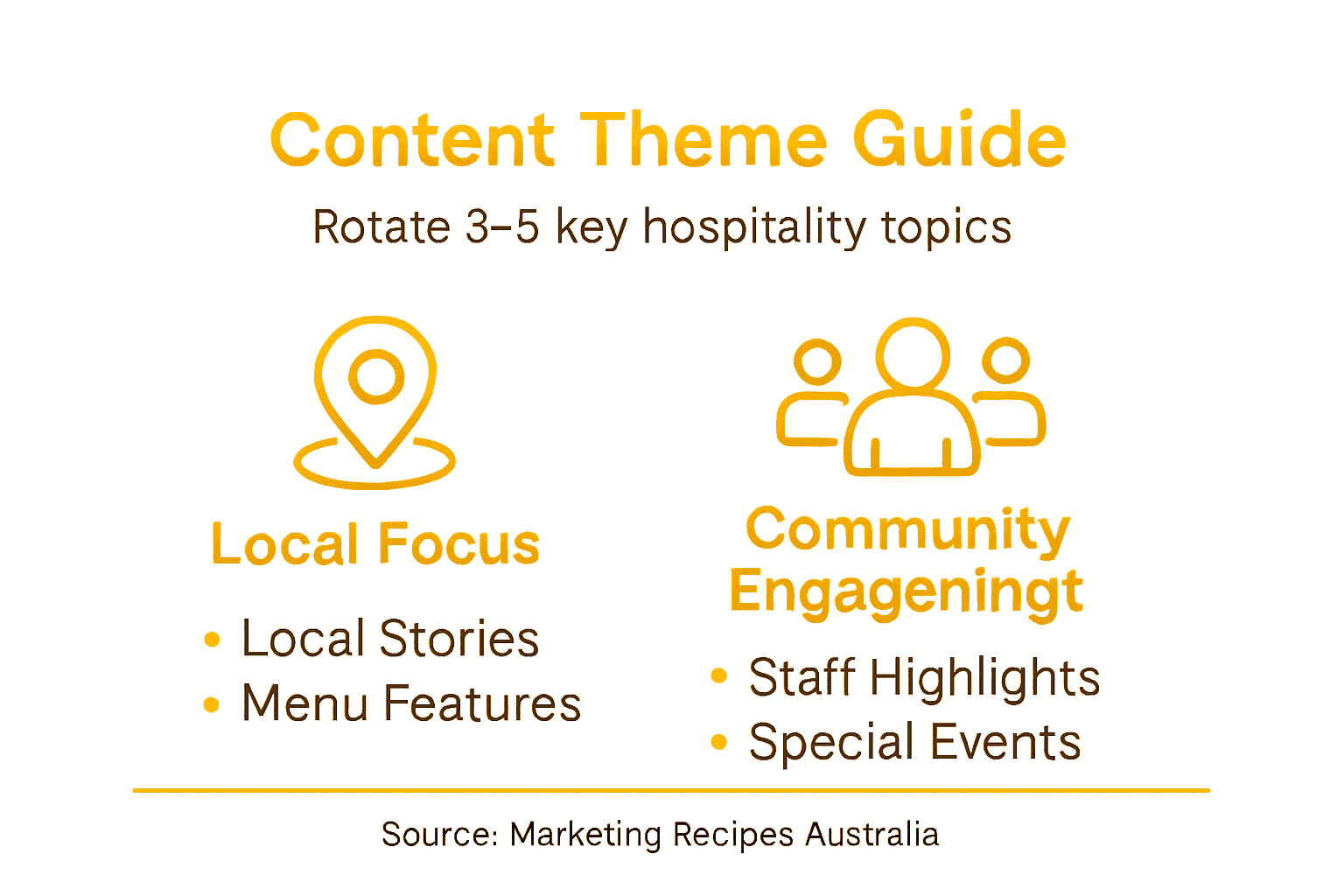
Pro tip: Write your three to five content themes down and create a simple one-page visual showing example posts for each theme; this stops your team from creating random content and keeps everyone aligned on your brand voice.
Step 4: Create and schedule engaging posts
Now you’re ready to actually create content that stops the scroll and makes people want to engage with your hospitality business. This step involves understanding what makes posts resonate with your audience, then building a system so you’re not scrambling to create content every single day. Smart scheduling means you can batch your content creation and maintain consistency even when you’re busy running your restaurant or café.
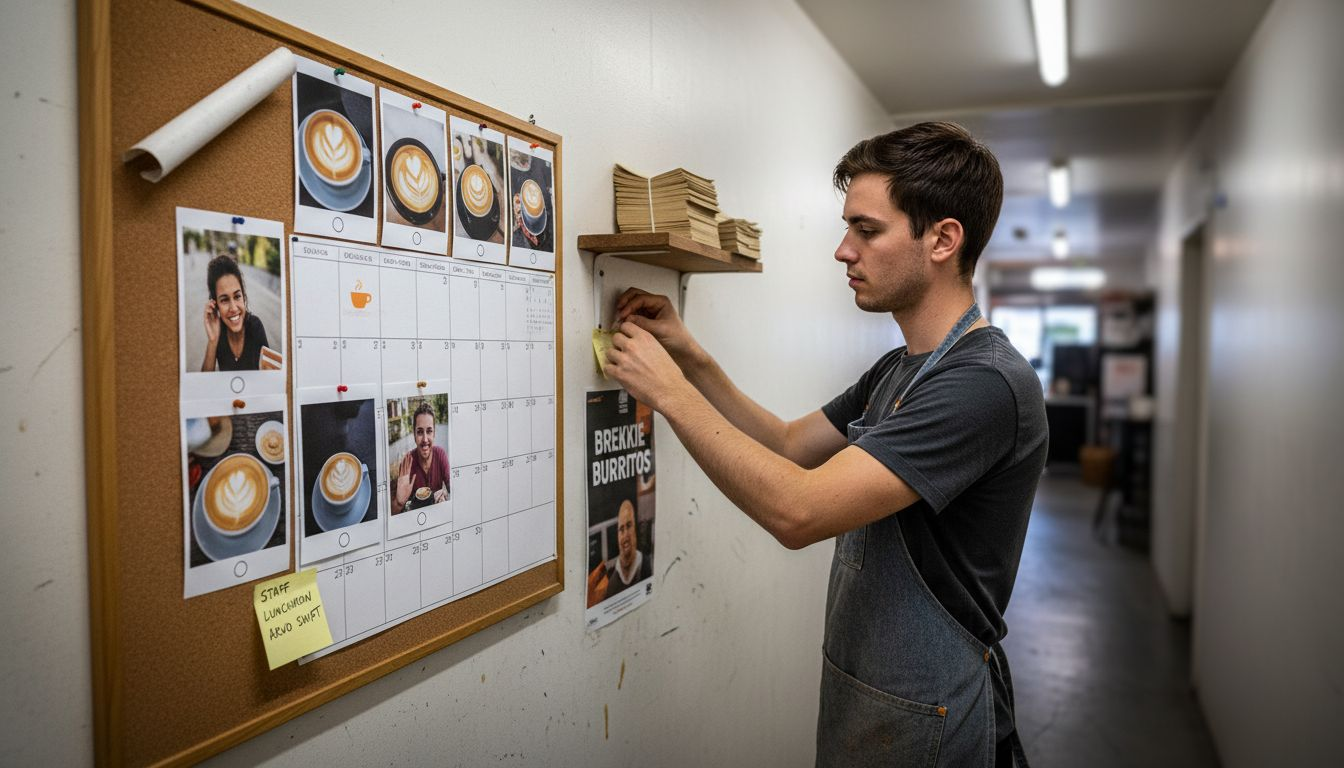
Start with the fundamentals of what works. High quality images and videos increase engagement and bookings across Australian hospitality businesses, so invest in decent photography or video whenever possible. This doesn’t mean expensive equipment. Your smartphone camera is perfectly adequate if you understand lighting and composition. Photograph your food when it’s fresh and plated beautifully. Capture genuine moments of staff interacting with guests or preparing dishes. Show the atmosphere of your space during different times of day. The key is showing real moments, not perfectly styled shots that feel sterile. Write captions that tell a story or invite conversation rather than just describing what’s in the image. Ask questions like “What’s your go to order here?” or “Spot our new seasonal dish?” instead of broadcasting information at people. People engage when they feel invited into a conversation, not lectured.
Create a content calendar that shows what you’ll post and when. Plan posts across your three to five content themes so you’re rotating between different story types rather than posting the same style repeatedly. Schedule your posts for times when your audience is actually online and likely to engage. Generally, lunch time, early evening, and weekend mornings work well for hospitality, but this varies by audience. Use your chosen platform’s native scheduling tools or a management tool to queue posts in advance. Batch your content creation into dedicated sessions, perhaps one or two hours weekly, rather than scrambling daily. This approach prevents burnout and maintains quality. When you schedule content strategically, your audience sees consistent posts without you constantly thinking about social media. Test different posting times and monitor which ones get the best response, then adjust accordingly. Scheduling posts and aligning them with marketing campaigns maintains consistency and helps you build momentum toward your audience goals.
Pro tip: Create a simple spreadsheet with three columns: content theme, post idea, and required assets, then fill it out monthly so you always know what’s coming next and can gather photos or footage in advance rather than panicking at post time.
Step 5: Monitor performance and refine strategy
Your social media strategy isn’t a set and forget operation. The real work happens after you’ve posted content, when you analyse what’s actually working with your audience and adjust accordingly. Monitoring performance tells you whether you’re heading towards your goals or wasting effort on content that nobody engages with. This step separates successful hospitality social media from the kind that fades into obscurity.
Start by checking your platform analytics weekly. Most platforms provide basic metrics directly in your business account dashboard. Look at which posts got the most engagement, saves, and shares. Which content themes performed best? Did your Local Stories posts outperform Behind the Scenes content? Did video generate more engagement than static images? Did certain posting times attract bigger audiences than others? Real time analytics help refine social media strategies when adapting to changing customer behaviours and market conditions. Pay attention to clicks to your website or booking links, not just likes and comments. A post with fewer likes but multiple booking clicks is infinitely more valuable than a heavily liked post that nobody acts on. Track these patterns in a simple spreadsheet monthly so you can spot trends over time rather than reacting to weekly blips. Maybe Tuesday evening posts consistently outperform Wednesday morning posts. Maybe food photography drives more bookings than team photos. Maybe Reels generate three times more reach than carousel posts. These patterns become your roadmap.
Based on what you learn, refine your strategy. If one content theme consistently underperforms, experiment with posting it at different times or in a different format before abandoning it entirely. If certain posting times work brilliantly, schedule more posts then. If video consistently outperforms static images but you’re posting mostly photos, shift your content mix. Analysing usage trends and demographic engagement helps maximise impact with your target audiences. Don’t make changes based on a single post or week of data. Give strategic changes at least four to six weeks before evaluating results, because building momentum takes time. Every three months, sit down and review your performance against the goals you set in Step 1. Are you actually driving more foot traffic during target times? Building a loyal local customer base? Increasing website clicks? If you’re tracking metrics that don’t connect to real business outcomes, shift what you measure. The best social media strategy adapts based on evidence, not guesses.
Below is a summary of actionable metrics to track for refining your social strategy:
Metric | Why It Matters | How To Use Insights |
Engagement Rate | Reflects audience interaction | Prioritise high-response content themes |
Booking Clicks | Ties directly to revenue | Focus on post formats that drive action |
Reach/Impressions | Measures audience growth | Adjust schedule for broadest awareness |
Top Performing Times | Identifies best posting windows | Schedule posts for peak engagement |
Pro tip: Screenshot your analytics every month and save them in a folder, then compare month to month to spot trends; this simple habit prevents you from forgetting what worked three months ago and repeating mistakes.
Boost Your Hospitality Business with a Tailored Social Media Strategy
Struggling to convert social media effort into real bookings and loyal customers? The “Step by Step Social Media Strategy Hospitality Success Guide” highlights key challenges such as defining clear audience goals, selecting the right platforms, planning authentic Australian content themes, and consistently creating engaging posts. Without a focused strategy aligned to your unique business strengths and realistic goals, social media can feel overwhelming and ineffective.
Marketing Recipes Australia specialises in helping regional hospitality businesses like yours break through the noise with a kitchen-inspired approach to digital marketing. Our tailored services include expert social media management, creative video production, and strategic content creation designed to connect authentically with local audiences and tourists alike. We understand how critical it is to craft content themes that truly reflect your unique flavour and build momentum through consistent, impactful posts.
Take control of your hospitality marketing today. Partner with Marketing Recipes Australia to develop a clear, actionable social media strategy that drives bookings and builds community. Start by exploring how our combined video marketing and social media solutions can transform your online presence and deliver measurable results. Don’t let another quiet night go by without a plan. Visit Marketing Recipes Australia now and turn your local hospitality business into a thriving destination.
Frequently Asked Questions
How do I define my local hospitality audience goals?
To define your local hospitality audience goals, identify the different groups of customers you want to attract, such as families, couples, and business travellers. List their specific needs and what success looks like for each segment, like increasing website clicks from Instagram by 40% within three months.
What social media platforms should I focus on for my hospitality business?
Select one or two social media platforms based on where your target audience spends their time. Research competitors and align your choice with your business goals; for example, if you excel at photography, Instagram could be your best option.
How can I create engaging content for social media in the hospitality industry?
To create engaging content, use high-quality images and videos that showcase your hospitality space, dishes, and staff interactions. Plan posts around three to five content themes that resonate with your audience, such as
Recommended
Comments