What Is Brand Strategy and Why It Matters Regionally
- Eddie The Chef

- Dec 29, 2025
- 8 min read

Most australian retailers struggle to stand out in a crowded regional market, yet over 60 percent of Gippsland consumers say they buy from brands that reflect local values and identity. For small and medium retail businesses in Gippsland, building a stronger brand goes beyond eye-catching logos. It means shaping genuine customer connections that drive lasting loyalty and sales. This article reveals how tailored brand strategies can help regional businesses capture attention and build authentic trust in their communities.
Table of Contents
Key Takeaways
Point | Details |
Brand Strategy Importance | A brand strategy goes beyond just a logo; it shapes customer perceptions and creates emotional connections. |
Core Elements to Focus On | Successful brand strategies include a clear mission, defined personality, and an understanding of the target audience. |
Risks and Costs | Inconsistent messaging or misaligned promises can damage trust, making risk assessment essential for regional businesses. |
Local Connection | Building authentic connections in Gippsland requires understanding local culture and actively engaging with the community. |
Defining Brand Strategy for Local Businesses
A brand strategy represents far more than just a logo or visual identity for local businesses across regional Victoria. It’s a comprehensive blueprint that articulates how a business wants customers to perceive and experience its unique value proposition. According to Queensland Government business resources, brand strategy integrates tangible and intangible elements that shape customer perceptions and emotional connections.
For regional businesses, developing an effective brand strategy means understanding your core values, target market, and competitive landscape. This involves creating a cohesive narrative that communicates what makes your business distinctive. A well-crafted brand strategy helps small local enterprises differentiate themselves from competitors by highlighting their unique strengths, local expertise, and community connections. The goal isn’t just attracting customers but building lasting relationships that transform casual buyers into loyal advocates.
Successful brand strategies typically include several key components: a clear mission statement, defined brand personality, consistent visual and messaging guidelines, and a deep understanding of target audience needs. University of New South Wales’ branding approach emphasizes creating a systematic framework that ensures every customer interaction reinforces the brand’s core identity. For regional businesses, this might mean developing communication styles that reflect local culture, using imagery that resonates with community values, and maintaining a genuine, approachable tone across all marketing channels.
Pro tip: Conduct a comprehensive brand audit every 12-18 months to ensure your strategy remains relevant and aligned with evolving customer expectations and market dynamics.
Popular Brand Strategy Types and Approaches
Regional businesses have several brand strategy types to consider, each offering unique approaches to connecting with customers and establishing market presence. Queensland Government business resources highlight that the most effective strategies align closely with business goals, market positioning, and customer expectations. The primary brand strategy approaches include personal branding, corporate branding, product branding, and digital branding.
Personal branding focuses on positioning an individual as an expert or thought leader within their industry, which works exceptionally well for small businesses where the owner’s reputation directly influences customer trust. Corporate branding, by contrast, emphasizes the overall organisational identity, values, and reputation. Product branding concentrates on creating a distinct identity for specific products or service lines, helping businesses differentiate individual offerings in competitive markets. The Australian Marketing Institute’s competence frameworks suggest that modern businesses increasingly blend these approaches to create more holistic and adaptable brand strategies.
Digital branding has emerged as a critical strategy for regional businesses seeking to expand their reach and engagement. This approach leverages online platforms, social media, and digital content to build brand awareness and create meaningful connections with customers. Experiential branding takes this further by focusing on creating memorable interactions that go beyond traditional marketing, ensuring customers feel a genuine emotional connection to the brand. These strategies require continuous adaptation, understanding local market nuances, and maintaining authenticity in every customer interaction.
Pro tip: Conduct quarterly reviews of your brand strategy to ensure it remains responsive to changing market conditions and customer preferences.
Here’s a comparison of popular brand strategy types for regional businesses:
Strategy Type | Primary Focus | Typical Benefit | Best For |
Personal Branding | Individual reputation | Builds trust quickly | Owner-operated businesses |
Corporate Branding | Organisation-wide identity | Enhances overall credibility | Multi-location enterprises |
Product Branding | Distinct product/service image | Differentiates offerings | Businesses with diverse products |
Digital Branding | Online presence and outreach | Expands audience reach | Tech-savvy, growth-focused firms |
Experiential | Memorable customer encounters | Deepens emotional connection | Service and event businesses |
Key Elements of a Strong Brand Strategy
Building a powerful brand strategy requires careful consideration of several core elements that work together to create a compelling business identity. Queensland Government business resources highlight that a robust brand strategy begins with establishing a clear brand purpose that goes beyond mere profit, connecting deeply with customer values and organisational mission. This foundational element serves as a north star, guiding all brand communication and decision-making processes for regional businesses.

The second critical component involves developing consistent messaging and authentic engagement strategies. This means ensuring every touchpoint with customers reflects the same core values, tone, and personality. Brand positioning demands a thorough understanding of your target market, competitive landscape, and unique value proposition. The Australian Marketing Institute’s strategic frameworks emphasize the importance of crafting a distinctive narrative that differentiates your business from competitors while maintaining genuine connections with local customers.
Measuring and adapting your brand strategy is equally important. Successful regional businesses implement systematic approaches to track brand performance, customer perception, and market relevance. This involves regular brand audits, collecting customer feedback, and being willing to evolve your strategy in response to changing market dynamics. Key performance indicators might include customer loyalty metrics, brand recognition surveys, and engagement rates across various communication channels. The ultimate goal is creating a dynamic, responsive brand strategy that remains true to its core purpose while staying adaptable to regional business environments.
Pro tip: Conduct biannual brand strategy workshops involving team members from different departments to ensure holistic understanding and alignment of your brand vision.
Building Brand Connection in Gippsland
Building authentic brand connections in Gippsland requires a deep understanding of the region’s unique cultural landscape and community dynamics. The Gippsland Smart Specialisation Strategy project highlights the importance of collaborative approaches that leverage regional strengths and foster genuine community engagement. For local businesses, this means moving beyond traditional marketing to create meaningful relationships that reflect the genuine spirit of the Gippsland community.
Successful brand connection in this region demands a nuanced approach that celebrates local diversity and economic potential. This involves understanding the unique economic sectors that drive Gippsland’s prosperity, from agriculture and manufacturing to emerging innovative industries. Gippsland Multicultural Services’ community engagement strategies demonstrate the power of authentic representation, showing how brands can build trust by genuinely understanding and supporting local community needs. Regional businesses must focus on storytelling that highlights local achievements, supports community initiatives, and demonstrates a commitment to the region’s sustainable development.
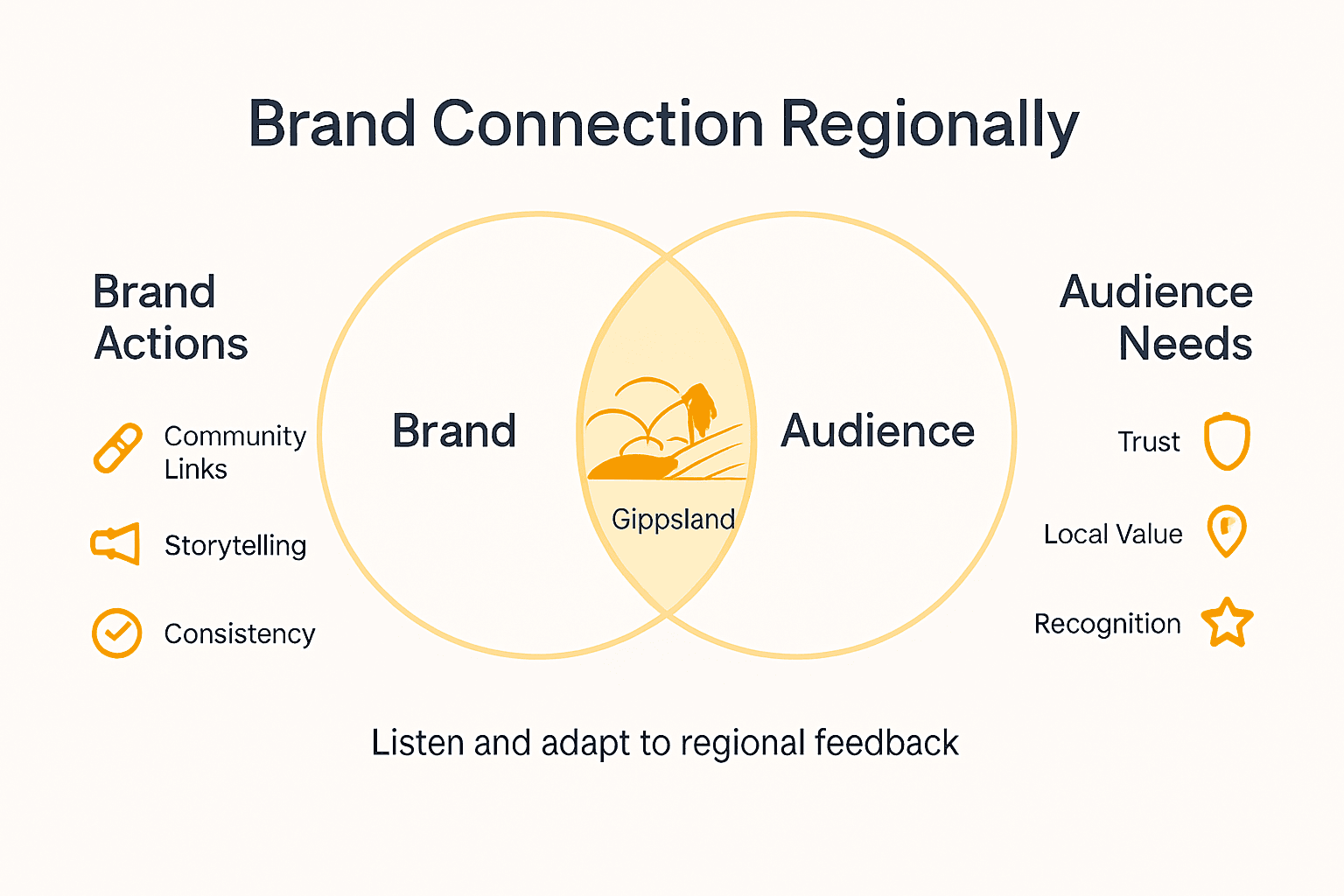
Digital and physical engagement strategies play crucial roles in building brand connections. This means creating content that speaks directly to local experiences, participating in community events, supporting local initiatives, and developing marketing approaches that feel genuinely local rather than corporate and disconnected. Successful brands in Gippsland understand that connection is about more than communication – it’s about demonstrating a real commitment to the region’s growth, diversity, and unique character. This requires consistent effort, active listening, and a willingness to adapt to the evolving needs of local communities.
Pro tip: Develop a local advisory group of community members to provide ongoing insights and feedback on your brand’s regional relevance and impact.
Risks, Costs, and Common Pitfalls
Developing a brand strategy involves navigating numerous potential risks that can significantly impact a business’s reputation and financial performance. RMIT University’s risk management resources highlight the critical importance of systematic risk assessment in identifying potential challenges before they escalate. The most common risks for regional businesses include inconsistent brand messaging, misalignment between brand promises and actual delivery, and failure to adapt to changing market expectations.
Financial implications of brand strategy missteps can be substantial. Poorly executed branding can lead to reduced customer trust, decreased market share, and increased marketing costs as businesses attempt to repair damaged reputations. Common pitfalls include over-promising and under-delivering, neglecting customer feedback, and failing to differentiate from competitors. Small regional businesses are particularly vulnerable, as their reputation is often more tightly connected to personal relationships and community perception. A single misstep can quickly erode years of carefully built trust and credibility.
Technology and digital platforms have introduced additional complexity to brand risk management. Rapid information spread through social media means that brand mistakes can quickly become amplified, potentially causing significant reputational damage. Businesses must develop robust monitoring and response strategies, ensuring they can quickly address potential issues before they escalate. This requires ongoing investment in reputation management, consistent training for staff, and a proactive approach to understanding and meeting customer expectations. Regional businesses must remain agile, continuously reassessing their brand strategy to remain relevant and responsive to changing market dynamics.
Below is a summary of common risks and pitfalls when developing a brand strategy:
Risk/Pitfall | Consequence | Prevention Tip |
Inconsistent messaging | Customer confusion | Maintain unified communication style |
Misaligned brand promises | Loss of trust | Regularly review public commitments |
Neglecting feedback | Missed improvement opportunities | Systematically gather customer input |
Over-promising | Damage to reputation | Set realistic, achievable expectations |
Slow market adaptation | Decreased relevance | Schedule frequent strategy reviews |
Pro tip: Implement a quarterly brand risk audit that includes customer feedback analysis, competitive landscape review, and potential scenario planning to proactively identify and mitigate potential brand vulnerabilities.
Elevate Your Local Brand with Proven Regional Marketing Expertise
Understanding the importance of a clear and authentic brand strategy is just the first step for regional businesses looking to build lasting customer connections. The article highlights challenges like maintaining consistent messaging, adapting to market dynamics, and creating genuine brand engagement within communities such as Gippsland. At Marketing Recipes Australia, we specialise in crafting tailored digital marketing strategies that directly address these pain points by combining strategic consulting, creative content, and digital tools designed specifically for local businesses.
Our holistic approach includes everything from compelling video marketing to social media management and website design that resonate with your unique regional audience. By partnering with Marketing Recipes, you gain access to expertise developed over 30+ years supporting regional Australian enterprises to thrive in competitive markets. Let us help you transform your brand strategy into real growth and deeper community trust.
Discover how a customised brand strategy can make a difference for your business today.

Ready to unlock your brand’s true potential with specialised regional marketing solutions Visit Marketing Recipes Australia to explore how our full menu of services can bring your brand to life Connect with us now to start building a powerful and authentic brand presence that your community will trust and support
Learn more about our approach at Marketing Recipes Australia and find the perfect marketing recipe for your business growth.
Frequently Asked Questions
What is a brand strategy?
A brand strategy is a comprehensive plan that outlines how a business wants to be perceived by its customers. It includes elements like mission statements, brand personality, messaging guidelines, and a deep understanding of the target audience.
Why is brand strategy important for local businesses?
Brand strategy is crucial for local businesses as it helps differentiate them from competitors, build lasting customer relationships, and create an emotional connection with the community. This fosters customer loyalty and enhances the business’s reputation in the local market.
What are the key components of a strong brand strategy?
The key components of a strong brand strategy include a clear brand purpose, consistent messaging, brand positioning, and a method for measuring brand performance. These elements work together to create a compelling and cohesive brand identity.
How often should a business review its brand strategy?
It is recommended that businesses conduct regular reviews of their brand strategy, ideally every 12-18 months, to remain relevant and responsive to changing customer expectations and market dynamics.
Recommended
Comments