Digital Marketing Course Outline – Practical Skills for Gippsland SMEs
- Eddie The Chef
- a few seconds ago
- 8 min read

Over 90 percent of Australians use internet services every day, transforming how businesses in Gippsland connect with customers. For retail and hospitality owners, digital marketing is no longer just optional—it is vital for reaching local audiences and driving growth in the australian marketplace. This guide uncovers practical digital strategies suited to small and medium enterprises, cutting through complexity to help you make smarter choices and stand out in your Gippsland community.
Table of Contents
Key Takeaways
Point | Details |
Importance of Digital Marketing in Australia | Businesses must develop effective digital marketing strategies to engage Australian consumers in a connected marketplace. |
Core Digital Marketing Strategies | Key strategies include SEO, social media marketing, PPC, content marketing, and email marketing for driving engagement and conversions. |
Compliance with Privacy Regulations | Understanding and adhering to Australian privacy laws is essential for building trust and ensuring data security in digital marketing practices. |
Overcoming Challenges for SMEs | Small businesses should invest in skills development and strategic planning to navigate technical challenges and maximise their online potential. |
Defining Digital Marketing in Australia
Digital marketing represents a comprehensive strategy for businesses to connect with potential customers through online channels and digital technologies. In Australia, digital marketing strategies have become essential for businesses seeking to engage audiences effectively in an increasingly connected marketplace. The landscape encompasses multiple digital platforms and techniques designed to reach, interact with, and convert target consumers.
At its core, digital marketing involves promoting products and services across digital media including social platforms, search engines, websites, and targeted advertising networks. With over 90% of Australians actively using internet services, businesses must develop sophisticated online approaches that resonate with local consumer behaviours and preferences. These strategies might include search engine optimisation (SEO), pay-per-click advertising, email marketing campaigns, content creation, and strategic social media engagement.
The Australian digital marketing ecosystem demands nuanced understanding of local market dynamics. Successful approaches require navigating legal advertising regulations, understanding consumer privacy requirements, and leveraging technologies like artificial intelligence and automated marketing tools. Businesses must create targeted campaigns that speak directly to Australian consumers’ expectations, using data-driven insights to personalise messaging and improve engagement rates.
Pro tip: Invest time in understanding your specific audience’s online behaviours and preferences before designing your digital marketing strategy.
The following table summarises the main digital marketing strategies and their benefits for Australian businesses:
Strategy | Main Focus | Key Benefit |
Search Engine Optimisation (SEO) | Website visibility | Increases organic traffic |
Social Media Marketing | Audience engagement | Builds brand awareness |
Pay-Per-Click (PPC) | Paid advertising reach | Drives targeted leads quickly |
Content Marketing | Value-driven content | Establishes industry authority |
Email Marketing | Direct customer access | Nurtures ongoing relationships |
Core Components of a Course Outline
A comprehensive digital marketing course for Gippsland SMEs must be strategically designed to equip business owners with practical, actionable skills. Digital marketing course curriculum typically encompasses a range of essential modules that prepare participants to navigate the complex digital landscape effectively. The structured approach ensures participants gain both theoretical knowledge and hands-on experience across multiple digital platforms and marketing strategies.

The core components of an effective digital marketing course should include in-depth modules covering critical areas such as search engine optimisation (SEO), social media marketing, content strategy, pay-per-click (PPC) advertising, email marketing, and web analytics. Each module needs to focus on practical implementation strategies specifically tailored to small and medium enterprises in the Gippsland region. This means moving beyond generic theory and providing contextualised learning that addresses the unique challenges faced by local businesses in developing and executing digital marketing strategies.
Participants should expect a curriculum that balances technical skills with strategic thinking. This includes learning how to conduct market research, develop targeted digital campaigns, analyse performance metrics, and adapt strategies based on real-world data. Practical components such as hands-on workshops, case study analyses, and live project work are crucial for translating theoretical knowledge into actionable business skills. The course should also cover emerging technologies and trends, ensuring that business owners can stay ahead of the rapidly evolving digital marketing landscape.
Pro tip: Choose a digital marketing course that offers practical, scenario-based learning with direct application to your specific business context.
Essential Tools and Platforms Explored
Digital marketing requires a robust toolkit of platforms and technologies that enable small businesses to effectively reach and engage their target audiences. While no single universal set of tools works for every business, several key platforms have emerged as essential for Gippsland SMEs looking to build a comprehensive digital marketing strategy. Understanding these tools can help businesses streamline their marketing efforts and maximise their online potential.
The core digital marketing toolkit typically includes powerful platforms for social media management, search engine optimisation, email marketing, and analytics. Social media management tools like Hootsuite or Buffer allow businesses to schedule posts, track engagement, and manage multiple platform accounts simultaneously. Search engine optimisation platforms such as SEMrush and Google Analytics provide critical insights into website performance, keyword rankings, and audience behaviour. Email marketing platforms like Mailchimp offer sophisticated campaign management, automated email sequences, and detailed performance tracking capabilities that are crucial for small businesses seeking to nurture customer relationships.
For Gippsland businesses, selecting the right combination of tools requires careful consideration of budget, technical capabilities, and specific marketing objectives. Some platforms offer integrated solutions that combine multiple functions, while others specialise in specific areas of digital marketing. Cloud-based tools have made sophisticated marketing technologies accessible even to smaller businesses, enabling them to compete effectively with larger organisations. Businesses should prioritise tools that offer user-friendly interfaces, robust reporting features, and scalability to support their growth and evolving marketing strategies.
Pro tip: Start with free or low-cost versions of marketing tools to understand their features before committing to full-price subscriptions.
Here is a comparison of popular digital marketing tools and their common uses for Gippsland SMEs:
Tool/Platform | Main Purpose | Typical Use Case |
Hootsuite | Social media management | Scheduling and tracking posts |
SEMrush | SEO improvement | Monitoring search rankings |
Mailchimp | Email campaign automation | Sending promotional newsletters |
Google Analytics | Web traffic analysis | Measuring visitor interactions |
Buffer | Social content scheduling | Managing multiple profiles |
Australian Laws, Privacy and Compliance
Digital marketing for Australian businesses requires a comprehensive understanding of legal frameworks and privacy regulations that protect consumer rights and data integrity. Australian Privacy Principles establish critical guidelines for how organisations manage personal information, creating a robust system of accountability and transparency in digital communications and marketing practices.
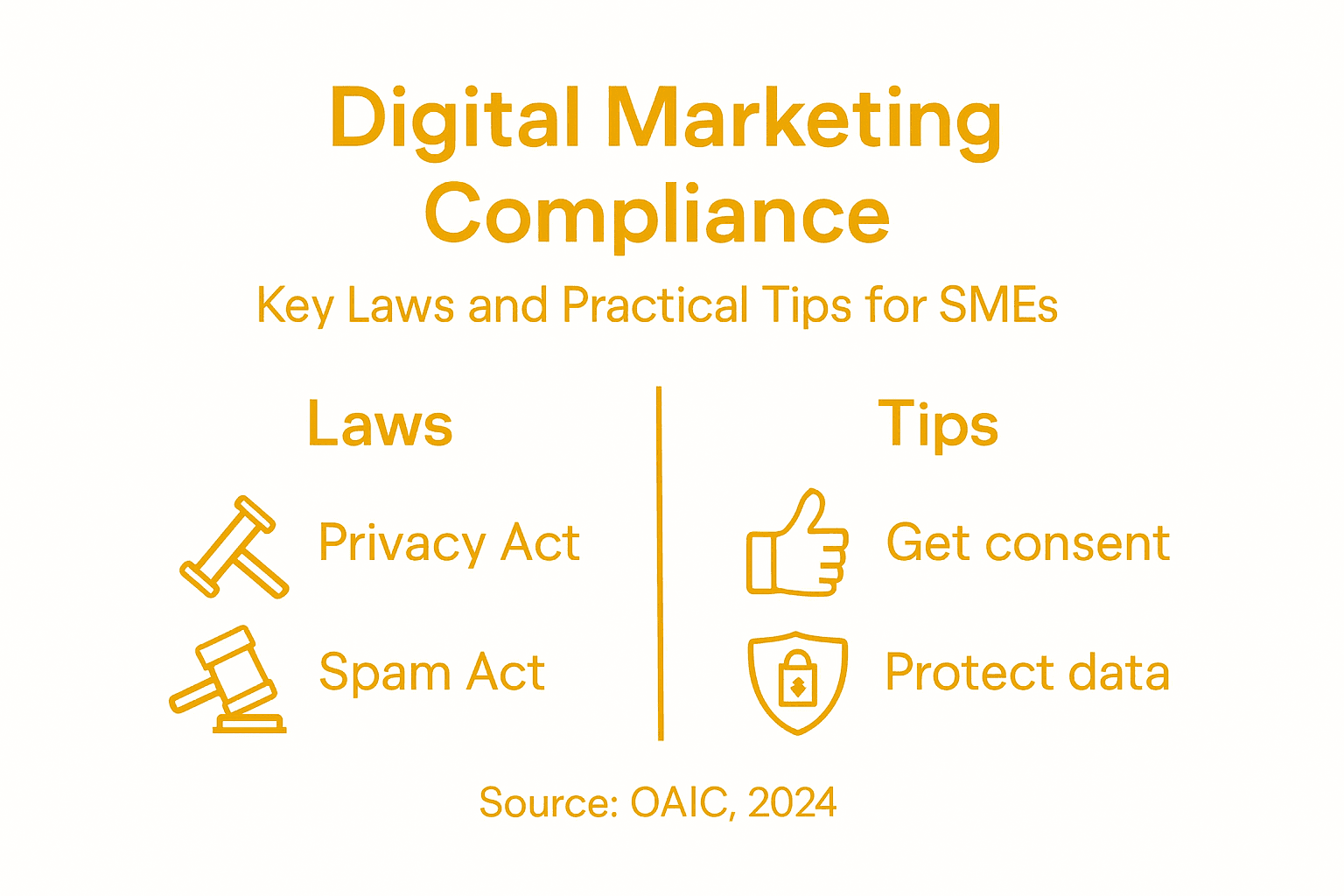
The Privacy Act 1988 mandates specific requirements for businesses collecting, storing, and using personal data. Key compliance areas include obtaining explicit consent for data collection, providing clear privacy policies, ensuring secure data storage, and maintaining transparent communication about how customer information will be used. Businesses must implement robust mechanisms to protect personal information, manage data breaches effectively, and provide individuals with options to access and correct their personal data. This involves developing comprehensive privacy strategies that go beyond mere legal compliance and demonstrate genuine respect for customer privacy.
With the rapid evolution of digital technologies, Australian businesses must stay informed about regulatory changes and emerging compliance requirements. The Digital Platform Regulators Forum plays a crucial role in coordinating digital space regulations, focusing on consumer protection and online safety. Small and medium enterprises in Gippsland need to develop proactive approaches to data management, including regular privacy audits, staff training on data handling, and implementing secure digital marketing practices that align with current legal standards. Understanding these requirements is not just about avoiding penalties, but about building trust with customers and demonstrating professional integrity.
Pro tip: Consult a legal professional specialising in digital privacy to ensure your marketing practices fully comply with current Australian regulations.
Common Challenges and Success Factors
Digital marketing for Gippsland SMEs presents a complex landscape of opportunities and obstacles. Digital marketing challenges reflect the nuanced reality of small business operations in a rapidly evolving technological environment. Understanding these challenges is crucial for developing effective strategies that can transform potential barriers into competitive advantages.
Small businesses frequently encounter significant hurdles in digital marketing, including limited budget allocations, technological complexity, and gaps in technical skills. Key challenges involve managing multiple digital channels effectively, understanding return on investment, and creating consistent, engaging content that resonates with target audiences. Website performance issues, such as slow loading times and lack of social proof, can significantly undermine digital marketing efforts. Businesses must invest in developing digital literacy, understanding consumer online behaviours, and creating strategies that are both cost-effective and technologically sophisticated.
Successful digital marketing for Gippsland SMEs requires a strategic approach that balances technical knowledge with creative communication. This means developing a deep understanding of local market dynamics, leveraging data-driven insights, and creating targeted marketing strategies that speak directly to customer needs. Building trust through transparent communication, demonstrating clear value propositions, and continuously adapting to technological changes are critical success factors. Small businesses that can navigate these challenges effectively will be well-positioned to compete in an increasingly digital marketplace, turning potential obstacles into opportunities for growth and customer engagement.
Pro tip: Regularly audit your digital marketing strategies and invest in ongoing skills development to stay ahead of technological changes.
Transform Your Gippsland SME’s Digital Marketing Skills Today
Facing the challenges of limited budgets, complex digital platforms, and the need for practical, hands-on learning is common for Gippsland SMEs looking to grow online. This article highlights how essential it is to master core skills like SEO, social media engagement, and email marketing while navigating privacy laws and choosing the right tools. At Marketing Recipes Australia, we understand these pain points and offer tailored solutions to equip your business with effective, regional digital marketing strategies that work.
Our unique ‘kitchen-inspired’ approach blends over 30 years of experience with a full menu of services including video marketing, web design, and content creation. Whether you need to amplify your social media presence or launch targeted email campaigns, our expert team focuses on delivering affordable, practical, and creative digital marketing solutions crafted especially for Gippsland businesses. Learn more about how we can elevate your marketing efforts by visiting Marketing Recipes Australia.
Ready to build a competitive edge and connect authentically with your customers?

Discover how practical digital marketing can transform your Gippsland SME’s growth. Explore our tailored strategies and start turning challenges into opportunities today with Marketing Recipes Australia. For expert guidance and a bespoke approach, reach out now and take control of your digital future.
Frequently Asked Questions
What are the key components of a digital marketing course for SMEs?
A comprehensive digital marketing course for SMEs should cover modules such as search engine optimisation (SEO), social media marketing, content strategy, pay-per-click (PPC) advertising, email marketing, and web analytics, ensuring practical implementation tailored to small and medium enterprises.
How can digital marketing strategies benefit my small business?
Digital marketing strategies can increase your online visibility, engage your target audience effectively, drive traffic to your website, and cultivate relationships with customers, ultimately leading to higher conversion rates and business growth.
What tools are essential for implementing a digital marketing strategy?
Key tools include social media management platforms like Hootsuite or Buffer, SEO tools such as SEMrush and Google Analytics, and email marketing solutions like Mailchimp, all of which facilitate effective audience engagement and performance tracking.
How important is understanding legal and privacy regulations in digital marketing?
Understanding legal frameworks and privacy regulations is crucial in digital marketing to ensure compliance with data protection laws, build customer trust, and maintain a transparent relationship with your audience.
Recommended