Digital Marketing Checklist 2025 for Regional Success
- Eddie The Chef

- Dec 25, 2025
- 8 min read

More than 60 percent of australian regional businesses report that digital marketing impacts their local growth. For Gippsland owners, staying visible online shapes customer connections and keeps you ahead of regional competitors. Mapping your current digital footprint, defining audience segments, and choosing the right tools help you target local customers with campaigns that actually deliver results. Practical steps and proven strategies can make digital marketing affordable and effective for every stage of your business journey.
Table of Contents
Quick Summary
Key Insight | Explanation |
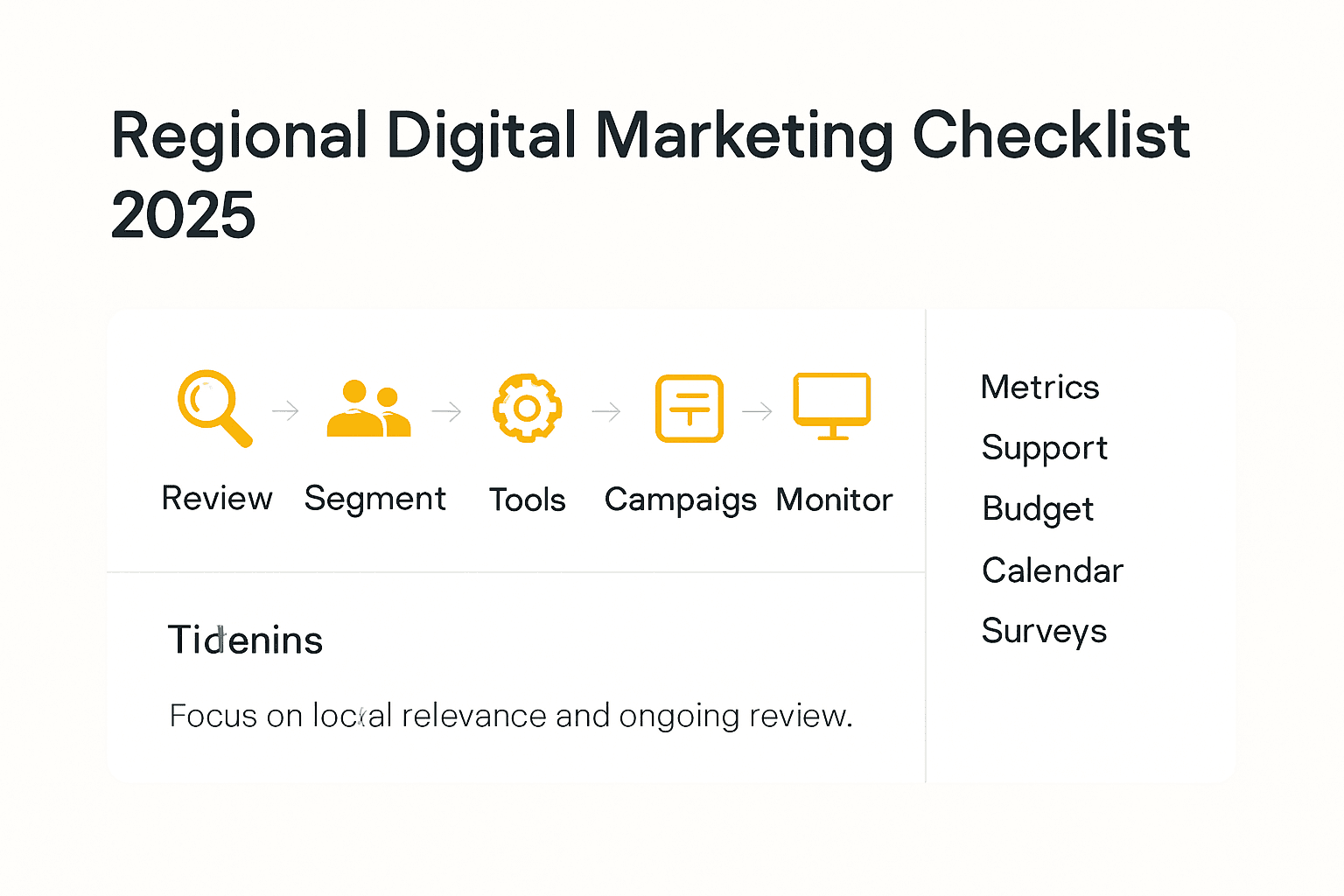
1. Conduct a Digital Audit | Audit your digital assets to identify strengths and weaknesses for better marketing strategy. |
2. Define Local Audience Segments | Break down your customer base into target groups to tailor your marketing messages effectively. |
3. Select Appropriate Digital Tools | Choose user-friendly digital tools tailored to your specific business needs for improved efficiency. |
4. Implement Multi-Channel Campaigns | Develop cohesive campaigns across various platforms to engage your audience in multiple ways. |
5. Monitor and Adjust Strategies | Regularly track performance metrics to refine your digital marketing strategies and enhance ROI. |
Stage 1: Assess current online presence
An effective digital marketing strategy begins with understanding your existing online landscape. In this stage, you’ll comprehensively map out your current digital footprint to identify strengths, gaps, and opportunities for improvement across digital channels.
Start by conducting a thorough audit of your digital assets. Examine your website, social media profiles, Google My Business listing, and any online directories where your business appears. Evaluating digital communication strategies involves measuring key performance metrics that reveal how customers currently interact with your online presence. Look closely at website traffic, social media engagement rates, follower demographics, and customer review signals across platforms.
Key areas to assess include your website design, mobile responsiveness, content relevance, search engine rankings, and overall user experience. Review your social media accounts to understand which platforms generate the most meaningful customer interactions. Check your business listings for accuracy and consistency of contact information, business descriptions, and operating hours. Pay special attention to customer reviews and ratings, as these significantly influence potential customers’ perceptions.
Pro tip: Create a spreadsheet to track your digital assets, noting current performance metrics, strengths, and improvement areas. This living document will serve as your roadmap for strategic digital marketing enhancements.
Stage 2: Define local audience segments
Successfully targeting your digital marketing efforts requires a deep understanding of your specific local customer base. In this stage, you’ll develop a nuanced profile of the customers most likely to engage with your business across the Gippsland region.

Understanding target market segmentation involves breaking down your potential customers into meaningful groups based on shared characteristics. Start by examining demographic factors like age, income, occupation, and family status specific to your local area. Consider geographical nuances that impact consumer behaviour in regional Victoria. The Australian Bureau of Statistics research on digital activities reveals significant variations in digital engagement across different community segments, which can help you refine your approach.
Dive deeper by analysing behavioural patterns and psychographic elements. What motivates your local customers? What challenges do they face? What digital platforms do they frequent? Map out customer personas that represent different segments of your target market. For a cafe in Traralgon, this might mean creating profiles like young professional remote workers, local tradies looking for quick lunch options, or retired community members seeking social connections. Each segment will require a slightly different marketing approach and messaging strategy.
Pro tip: Conduct informal surveys or conversations with existing customers to validate your audience segments. Personal interactions can reveal insights that data alone might miss.
This table outlines typical Gippsland audience segments and key digital behaviour traits:
Segment Example | Location | Typical Online Habits |
Remote Young Workers | Traralgon CBD | Frequent social media use, online reviews |
Local Tradies | Morwell, Moe | Search for quick lunch spots on mobile |
Retirees | Regional towns | Read community news, use Facebook groups |
Families | Latrobe Valley | Seek local events and deals online |
Stage 3: Select and implement digital tools
Navigating the world of digital marketing tools can feel overwhelming, but selecting the right technologies will streamline your strategy and amplify your regional business performance. This stage focuses on choosing digital tools that align perfectly with your marketing objectives and local business needs.
Developing a strategic approach to digital tool selection requires careful evaluation of your current digital capabilities and future growth potential. Start by mapping out the specific functions you need support with such as social media management, email marketing, customer relationship tracking, or analytics reporting. Consider tools that offer seamless integration and provide robust reporting features specific to regional Australian markets. Look for platforms that understand the unique challenges of small businesses in areas like Gippsland and offer scalable solutions that can grow alongside your enterprise.
Prioritise user friendly tools with strong customer support and reasonable pricing structures. Test multiple options through free trials to understand their practical application in your specific business context. Pay attention to mobile compatibility, reporting depth, and how easily the tool connects with your existing digital infrastructure. Some key categories to explore include customer relationship management systems, social media scheduling platforms, email marketing software, and local search optimisation tools.
Pro tip: Always allocate a small budget for tool exploration and be prepared to switch platforms if your initial choice does not deliver the expected results. Flexibility is key in digital marketing technology selection.
Here’s a summary of digital marketing tools and their primary business benefits for Gippsland businesses:
Tool Category | Key Function | Local Business Impact |
Social Media Scheduling Platforms | Schedule and manage posts | Boosts customer engagement efficiently |
Email Marketing Software | Automate email campaigns | Nurtures customer relationships |
CRM Systems | Track customer interactions | Enhances personalised service |
Local Search Optimisation Tools | Improve search visibility | Increases foot traffic and inquiries |
Analytics Reporting Platforms | Measure digital performance | Guides strategic business decisions |
Stage 4: Create and launch multi-channel campaigns
Multi-channel marketing represents a powerful strategy for reaching customers across different platforms and touchpoints. In this stage, you will develop a cohesive campaign that connects with your local audience through multiple digital and traditional marketing channels.
Developing effective multi-channel marketing strategies requires careful planning and consistent messaging across all platforms. Start by identifying the key channels most relevant to your Gippsland business such as social media, local online directories, email marketing, Google My Business, and targeted digital advertising. Ensure your campaign narrative remains consistent while adapting the content and format to suit each platform’s unique characteristics. For instance, a Facebook post might use more conversational language, while a Google Ad needs to be more direct and concise.
When crafting your campaign, focus on creating compelling content that speaks directly to the different audience segments you identified earlier. Use a mix of visual, written, and interactive content to maintain engagement. Track the performance of each channel meticulously, understanding that some platforms will perform better than others depending on your specific target market. Be prepared to adjust your strategy quickly based on real time performance data and audience feedback.
Pro tip: Create a central content calendar that synchronises all your multi-channel marketing activities to ensure consistent timing and messaging across different platforms.
Stage 5: Monitor results and refine strategies
Successful digital marketing is an ongoing process of measurement, analysis, and continuous improvement. This final stage focuses on understanding your campaign performance and making data driven adjustments to maximise your marketing effectiveness.
Developing comprehensive marketing performance evaluation frameworks requires a systematic approach to tracking key metrics across all your digital channels. Begin by establishing a consistent reporting schedule where you review critical performance indicators such as website traffic, engagement rates, conversion numbers, and return on investment for each marketing channel. Pay close attention to metrics specific to regional businesses in Gippsland such as local search visibility, Google My Business interactions, and social media reach within your targeted audience segments.
Utilise analytics tools to dig deeper into the data and uncover insights about customer behaviour and campaign performance. Look for patterns in how different audience segments interact with your content and identify which channels and messaging strategies generate the most meaningful engagement. Be prepared to make rapid adjustments to your marketing mix based on these insights. Some channels may require more investment while others might need significant strategy refinements or potentially discontinuation if they are not delivering desired results.
Pro tip: Create a monthly performance review dashboard that provides a quick visual snapshot of your key marketing metrics, allowing you to track progress and make informed decisions efficiently.
Elevate Your Regional Digital Marketing with Proven Local Expertise
Are you finding it tough to navigate the complex steps in your digital marketing checklist for 2025? The challenges of assessing your online presence, defining local audience segments, selecting the right tools and launching campaigns can feel overwhelming for regional businesses in Australia. Many local operators struggle with aligning their digital strategies to truly connect with Gippsland and other regional communities. Key pain points include managing multiple channels effectively, creating content tailored to diverse customer profiles, and continuously refining campaigns based on real data.
At Marketing Recipes Australia, we specialise in turning these challenges into growth opportunities through our holistic and tailored marketing approach. With over 30 years of experience combining traditional video production and innovative digital solutions, we help regional businesses craft authentic customer connections and boost competitive advantage. Our services cover everything from strategic consulting and web design to social media management and engaging video content including doodle and showcase videos. We understand the importance of multi-channel campaigns and provide expert guidance on choosing the right digital tools to track success and refine your efforts.
Unlock the full potential of your regional marketing strategy by partnering with a team that truly knows your market. Explore how we bring your digital marketing checklist to life with personalised solutions at Marketing Recipes Australia. Learn more about our approach on the full-spectrum digital marketing services that are designed specifically for regional success and discover strategic support that takes the guesswork out of your campaigns.
Ready to transform your marketing plan into measurable results now

Take the first step today with Marketing Recipes Australia. Let us help you build a robust, multi-channel marketing strategy that delivers real growth in your regional community.
Frequently Asked Questions
How do I assess my current online presence for my regional business?
To assess your current online presence, conduct a thorough audit of your digital assets, including your website and social media profiles. Gather key performance metrics such as website traffic and engagement rates to identify strengths and opportunities for improvement.
What factors should I consider when defining my local audience segments?
When defining local audience segments, consider demographic factors like age, income, and occupation specific to your area. Analyse consumer behaviour and preferences to create detailed customer personas that will inform your digital marketing strategy.
How can I choose the right digital tools for my marketing strategy?
Select digital tools by mapping out the specific functions you need support with, such as social media management or email marketing. Test different platforms with free trials to see which align best with your needs and budget, ensuring they can integrate with your existing infrastructure.
What components should I include in my multi-channel marketing campaign?
Include key channels such as social media, email marketing, and local online directories in your multi-channel campaign. Ensure your messaging is consistent across these platforms while tailoring content to suit each channel’s characteristics, like casual language for social media posts.
How can I effectively monitor the results of my digital marketing efforts?
Monitor results by setting a consistent reporting schedule to evaluate key metrics such as website traffic and conversion rates. Use analytics tools to identify trends and adjust your strategies based on performance insights, aiming for reviews at least monthly to keep your marketing strategy responsive.
What should I do if a marketing channel isn’t delivering desired results?
If a marketing channel isn’t performing well, be prepared to make rapid adjustments based on your analysis. Consider reallocating your budget and resources to more effective channels, aiming to enhance overall engagement by targeting successful platforms within 30 days.
Recommended
Comments